24×7 – 365 Days | [email protected]

24×7 – 365 Days | [email protected]

24×7 – 365 Days | [email protected]

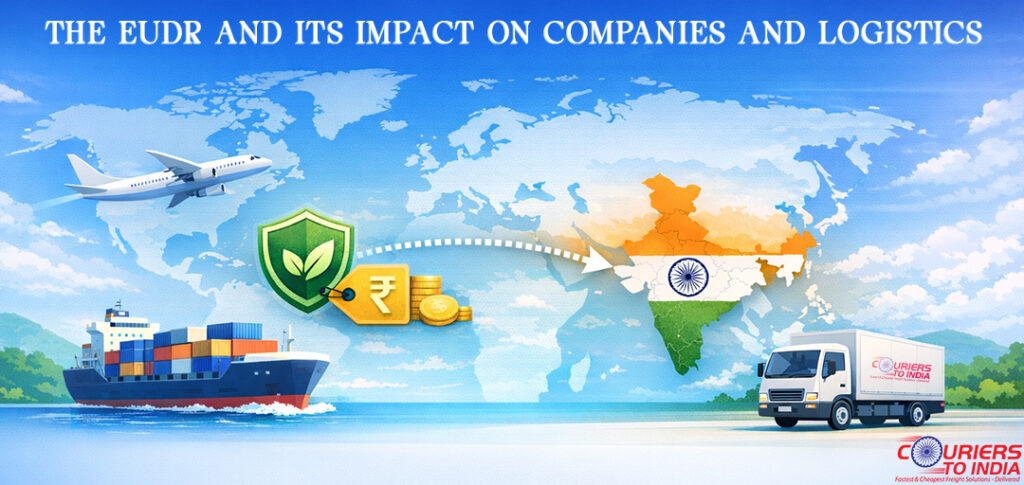
EUDR and Its Impact on Companies and Logistics

The EUDR and Its Impact on Companies and Logistics

The European Union Deforestation Regulation (EUDR) is one of the most significant sustainability-driven trade regulations introduced in recent years. Designed to minimize global deforestation linked to products entering the EU market, the EUDR directly impacts exporters, manufacturers, logistics providers, and supply chain managers worldwide.

The regulation requires companies to prove that their products are sourced from deforestation-free areas and meet strict traceability and geolocation standards. As a result, global supply chains—especially those involved in the handling of agricultural, timber, leather, and high-risk commodities—must adopt new due diligence practices.

Industries such as agriculture, food & beverage, forestry, leather processing, manufacturing, retail, and logistics will see fundamental changes in how goods are sourced, documented, transported, and delivered to the EU.

In short, the EUDR reshapes how global trade works, and businesses must adapt now to stay compliant and competitive.
→ Need help with EUDR-compliant logistics? Contact our experts today.

What is the EUDR?

The European Union Deforestation Regulation (EUDR) is a mandatory regulation adopted in 2023 to ensure that products entering or leaving the EU do not contribute to global deforestation or ecosystem degradation.

Purpose of the EUDR

The core purpose of the EUDR is to ensure that only deforestation-free products with verified traceability can be placed on the EU market. This marks a major transition toward sustainable, transparent supply chains, backed by geolocation and due diligence systems.

Key Objectives of the EUDR

  • Eliminate deforestation-linked commodities from EU trade.

  • Improve global supply chain transparency.

  • Encourage sustainable farming, forestry, and manufacturing.

  • Ensure traceability from origin to final product.

  • Strengthen environmental and social responsibility.

EUDR Implementation Timeline

  • 2023 – EUDR adopted by the European Parliament.

  • 2024 – Preparatory phase begins.

  • 2025–2026 – Full enforcement for large companies and SMEs.

  • 2027 – Stricter checks and full operational monitoring.

High-Risk Commodities Governed by EUDR

The regulation applies to both raw materials and derived products. Key commodities include:

  • Coffee.

  • Cocoa.

  • Soy.

  • Beef & cattle products.

  • Palm oil.

  • Timber & wood products.

  • Leather.

  • Rubber.

  • Paper & pulp.

  • Processed goods derived from these materials.

→ Exporting any of these products to the EU? You must be EUDR-ready.

Who Must Comply with EUDR?

EUDR is for a wide range of businesses involved in the production, distribution, import, and export of regulated commodities.

EU-Based Companies

  • Importers, retailers, wholesalers.

  • Large enterprises are placing products on the EU market.

  • Companies processing or manufacturing goods using regulated commodities.

Non-EU Exporters

Companies outside the European Union exporting regulated commodities or products to the EU must establish compliant due diligence systems.

Small & Medium Enterprises (SMEs)

SMEs are subject to EUDR obligations, although enforcement timelines may differ. They must still:

  • Verify supplier data.


  • Prove deforestation-free sourcing.


  • Maintain traceability documentation.

Global Suppliers and Producers

Farmers, cooperatives, plantations, and processors must provide:

  • Geolocation coordinates.

  • Proof of land legality.

  • Verification that the land is deforestation-free.

  • Supply chain records.

  • Supporting documentation.

→ Whether you are an exporter or supplier, EUDR compliance is non-negotiable.

Core Requirements of the EUDR

EUDR is for a wide range of businesses involved in the production, distribution, import, and export of regulated commodities.

Due Diligence Obligations

Companies must set up a mandatory due diligence system that provides:

  • Traceability to the plot/production level – exact coordinates of farms or origin locations.

  • Geolocation data – accurate mapping of raw material origins.

  • Satellite verification – validating land status through reliable geospatial tools.

  • Supplier documentation.

  • Detailed supply chain mapping.

Risk Assessment

Before exporting to the EU, companies must conduct a risk assessment, including:

  • Environmental risks (deforestation, land-use changes).

  • Social risks (indigenous rights, land ownership disputes).

  • Country risk classification.

  • Supplier credibility and audits.

  • Historical land-use data.

A shipment can only proceed if the risk is assessed as negligible.

Reporting Requirements

Mandatory reporting includes:

  • Due Diligence Statements (DDS) submitted via EU portals.

  • Annual compliance reports.

  • Supplier verification records

  • Documentation for customs checks.

  • Evidence of traceability and mapping.

→ Maintaining accurate documentation is essential to avoid shipment rejection.

Impact on Companies

Supply Chain Restructuring

To meet EUDR obligations, companies must upgrade their supply chains to achieve end-to-end traceability. This often requires adopting:

  • GIS mapping tools.

  • Blockchain-ledger traceability.

  • Digital compliance platforms.

  • Verified supplier networks.

  • Satellite-based monitoring systems.

Cost Implications

Compliance introduces additional financial requirements, including:

  • Investment in technology and geolocation systems.

  • Satellite verification and mapping expenses.

  • Audit & certification costs.

  • New administrative and documentation requirements.

While initial costs may be high, compliance builds long-term operational efficiency and reduces regulatory risk.

Legal & Operational Risks

Non-compliance can result in:

  • Heavy penalties.

  • Shipment delays or rejections.

  • Product seizure.

  • Loss of EU market access.

  • Damage to brand trust and investor confidence.

Sustainability & Brand Reputation

Companies that adopt EUDR early gain:

  • Strong ESG performance.

  • Higher trust among EU buyers.

  • Competitive advantage over non-compliant suppliers.

  • Better global market positioning.

→ Early compliance is not only safer — but it is also a strategic opportunity.

Impact on Logistics & Freight Companies

End-to-End Traceability in Logistics

Logistics providers must adjust workflows to support:

  • Product-to-plot traceability.

  • Linking cargo batches with geolocation data.

  • Chain-of-custody documentation.

  • Verified shipping records.

  • Digitized freight processes.

Documentation Challenges

Logistics documentation becomes more complex, requiring:

  • Harmonized supply chain data.

  • Integration with exporter systems.

  • Real-time information sharing.

  • Updated customs documentation.

  • Transparent carrier–shipper workflows.

Shipping Delays & Risk Management

Potential risks include:

  • Longer lead times.

  • Delays at ports due to compliance checks.

  • Increased auditing of high-risk goods.

  • Higher responsibility on carriers to ensure documentation accuracy.

Role of Logistics Companies in Compliance

Leading logistics providers are now acting as compliance partners by offering:

  • EUDR-ready shipping workflows.

  • Risk assessment tools.

  • Digital dashboards for clients.

  • Automated documentation systems.

  • End-to-end traceability support.

→ Partnering with an EUDR-ready logistics company reduces compliance complexity significantly.

Technology That Supports EUDR Compliance

Technology plays a central role in ensuring accurate and reliable compliance. Key tools include:

  • Satellite data & geolocation tools for deforestation verification.

  • Blockchain systems to ensure immutable supply chain records.

  • AI-based monitoring for early detection of land-use changes.

  • GIS mapping platforms enabling high-accuracy farm-to-port traceability.

  • Smart documentation systems for automated reporting and compliance workflows.

Digital adoption ensures zero data gaps and seamless end-to-end traceability.

Challenges Companies Are Facing

Businesses globally are struggling with:

  • Limited visibility across multi-tier supply chains.

  • Incomplete or missing supplier documentation.

  • High compliance cost for SMEs.

  • Fragmented cross-border logistics data.

  • Lack of trained personnel.

  • Difficulties in integrating new technologies.

  • Variability in country-level land records.

These challenges underline the need for reliable logistics and compliance partners.

Opportunities Created by the EUDR

Despite challenges, the EUDR creates several long-term opportunities:

  • Stronger global sustainability standards.

  • Improved supply chain transparency.

  • Reduced risk of illegal sourcing.

  • Long-term cost efficiency.

  • Strong ESG and brand perception.

  • Innovation in logistics and monitoring technology.

Companies that adapt early can secure premium buyer relationships and stronger EU market positioning.

How Companies and Logistics Providers Can Prepare

To be EUDR-ready, businesses should:

Build End-to-End Traceability Systems

Adopt GIS, GPS, blockchain, and supply chain tracking tools.

Conduct Supply Chain Audits

Verify supplier documentation, land legality, and origin mapping.

Adopt Digital Tools Early

Implement technologies that support satellite verification and automated reporting.

Train Internal Teams

Ensure compliance teams, logistics managers, and suppliers understand obligations.

Strengthen Contracts & SLAs

Mandate EUDR compliance obligations in supplier agreements.

Partner with EUDR-Ready Logistics Providers

Choose logistics partners offering traceability dashboards, verified documentation processes, and compliance guidance.

→ Need help preparing your supply chain for EUDR? Speak with our compliance experts.

Conclusion

The EUDR marks a transformative shift in global trade, pushing companies toward transparent, deforestation-free sourcing and robust supply chain verification. For exporters, manufacturers, and logistics providers, compliance is no longer optional — it is essential for EU market access.

Businesses that invest early in digital tools, traceability systems, and compliance partnerships will gain a significant competitive advantage, reduce risk, and strengthen their long-term sustainability credentials.

The future of international logistics is clear: sustainability, traceability, and compliance will define success.
→ Get EUDR-ready with our end-to-end compliance and logistics solutions. Contact us today.

Book Now

Book Now